


 (03) 9486 6721


Heavy upper eyelids, hooded skin, under-eye bags and puffiness are common reasons people enquire about eyelid surgery. Blepharoplasty can address excess skin, fat or tissue around the eyelids, although upper and lower eyelid surgery involve different techniques and treat different concerns.
Dr Jeremy Richardson, Specialist Plastic Surgeon at Queens Parade Specialists in Fitzroy North, Melbourne, has a special interest in facial cosmetic and reconstructive surgery. In consultation, he can discuss the suitability of upper or lower blepharoplasty based on your eyelid anatomy, the changes you want to address and your eye health.
What is blepharoplasty?
Blepharoplasty is eyelid surgery performed on the upper eyelids, lower eyelids or both. It can involve removing excess skin, adjusting or repositioning fat and tightening selected tissues to change the eyelid contour. It can address:
- Excess or hooded upper eyelid skin
- Heaviness around the upper eyelids
- Upper eyelid skin interfering with vision
- Under-eye bags or puffiness
- Loose lower eyelid skin
- Selected concerns about eyelid contour or asymmetry
Understanding what is causing these changes helps determine if surgery is suitable, and if so, which procedure or combination of procedures will practically address your concerns.
What is upper blepharoplasty?
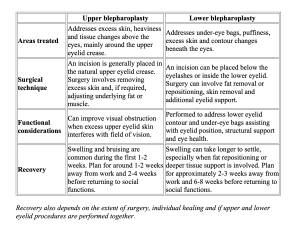
Upper blepharoplasty addresses excess skin and tissue above the eyes. It is commonly performed when upper eyelid skin creates heaviness, hooding or folds around the natural eyelid crease.
During upper blepharoplasty, an incision is usually placed within the natural eyelid crease. Excess skin is removed, and selected fat or muscle can be adjusted according to the patient’s anatomy.
Excess upper eyelid skin can sometimes extend over the eyelashes and interfere with the upper field of vision so surgery can also have a functional purpose.
Upper blepharoplasty may also be combined with blepharoptosis correction, where the muscle that elevates the upper eyelid is tightened to help lift a low-positioned upper eyelid, improving open of the eye and improving vision.
Upper eyelid surgery can be a suitable option for people with:
- Heavy or hooded upper eyelids
- Excess skin resting on the eyelashes
- Upper eyelid skin affecting peripheral vision
- Skin folds that interfere with applying eye makeup
- Asymmetry related to upper eyelid skin or tissue
Brow position is also important. A low or descending brow can contribute to upper eyelid heaviness and removing eyelid skin alone may not fully address the concern.
Dr Richardson will assess the relationship between the brow, upper eyelid skin and eyelid position before recommending a personalised surgical plan.
What is lower blepharoplasty?
Lower blepharoplasty addresses under-eye bags, fat prolapse, puffiness, loose skin and changes in the contour between the lower eyelid and cheek.
Lower eyelid surgery is more complex than simply removing excess skin. The delicate supporting structures of the lower eyelid must be assessed and managed carefully to reduce the risk of eyelid pulling, rounding or malposition. Incisions may be placed just below the lower eyelashes or inside the eyelid using a transconjunctival technique.
Surgery can involve removing or repositioning fat, tightening supporting tissues or removing a small amount of excess skin. The technique depends on anatomy and the changes being addressed.
Lower eyelid surgery can be a suitable option for people with:
- Prominent under-eye bags
- Puffiness caused by protruding fat pads
- Loose or excess lower eyelid skin
- Shadowing related to lower eyelid fat or contour
- Lower eyelid laxity or changes in tissue support
Not all under-eye concerns can be treated with blepharoplasty. Dark pigmentation, fine lines, skin texture and hollowing caused by volume loss may need different treatments, including autologous fat grafting or laser resurfacing.
During consultation, Dr Richardson will assess the lower eyelid and surrounding tissues to establish what is contributing to the concern and which surgical options are suitable.
Upper vs lower blepharoplasty
Can upper and lower blepharoplasty and a brow lift be combined?
Upper and lower blepharoplasty can be performed together when excess skin or tissue changes affect both areas. Combining the procedures allows the upper and lower eyelids to be treated during the same operation, rather than undergoing two separate surgeries.
If required, a brow lift may also be performed in the same procedure.
Not everyone needs all procedures. During consultation, Dr Richardson will examine your eyelid anatomy, brow position, skin quality and eye health, then explain a surgical plan that suits your individual concerns.
What to expect during blepharoplasty recovery
Bruising, swelling, tightness, dryness and mild discomfort are common during early recovery after eyelid surgery. Dr Richardson’s postoperative instructions include:
- Applying prescribed eye drops or ointment
- Using cold compresses as advised
- Resting with your head elevated
- Avoiding rubbing or placing pressure on your eyes
- Limiting bending, heavy lifting and strenuous exercise
- Avoiding eye makeup and contact lenses until advised
- Protecting healing skin and scars from sun exposure
- Attending scheduled postoperative reviews
Gentle walking can generally resume after 1 week, with gym exercise delayed for about 6-8 weeks.
Driving also requires planning. Allow approximately 2-3 weeks before returning to driving, provided vision is normal, movement is unrestricted and sedating medications are no longer required.
Visible swelling improves before healing is complete. Upper eyelid changes generally become clearer around 6 weeks, while lower eyelid results take approximately 2-3 months to become more apparent, but can sometimes take up to 6 months to settle. Scars continue to mature over several months.
These timeframes provide a general guide for planning, but Dr Richardson will give you more specific instructions according to your surgery and healing progress.
Blepharoplasty FAQs
What is transconjunctival blepharoplasty?
Transconjunctival blepharoplasty involves an incision inside the lower eyelid to remove or reposition fat pads. This may or may not be combined with an external skin incision. It may suit patients with under-eye bags but little excess lower eyelid skin.
What is transcutaneous blepharoplasty?
Transcutaneous blepharoplasty uses an incision just below the lower eyelashes, allowing Dr Richardson to remove excess skin, reposition fat and adjust supporting tissues. It is used when under-eye bags occur with loose skin or eyelid laxity, involving a scar close to the lash line.
Can blepharoplasty remove dark circles?
Blepharoplasty can reduce shadows caused by under-eye bags or protruding fat, but does not directly treat dark pigmentation. Suitability depends on the cause of the dark circles.
Can upper blepharoplasty improve vision?
Upper blepharoplasty can improve peripheral vision when excess eyelid skin obstructs the upper visual field. Visual field testing may be required, and Medicare rebates may apply if clinical criteria are met.
Will blepharoplasty leave visible scars?
Blepharoplasty leaves scars, usually positioned within the upper eyelid crease or just beneath the lower eyelashes. Some lower eyelid techniques use internal incisions. Scars generally become less noticeable as they mature, although healing varies.
Eyelid surgery in Melbourne
Dr Jeremy Richardson, MED0001204528, is an ANZBCPS Board Certified Specialist Plastic Surgeon with qualifications including MBBS (Hons), BMedSc (Hons), DipSurgAnat and FRACS (Plast). He has a special interest in facial cosmetic and reconstructive surgery, including blepharoplasty, brow lift, facelift, neck lift and rhinoplasty.
Consulting at Queens Parade Specialists in Fitzroy North, Dr Richardson provides individual assessment and advice on eyelid surgery, including surgical options, suitability, risks and recovery.
To discuss upper or lower blepharoplasty in Melbourne, contact Queens Parade Specialists to arrange a consultation.
This article is for general information and educational purposes only. It is not a substitute for professional medical advice, diagnosis or treatment. All surgery carries risk and results may vary. Consult Dr Jeremy Richardson, MED0001204528, MBBS (Hons), BMedSc (Hons), DipSurgAnat, FRACS (Plast), Specialist Plastic Surgeon, for personalised advice and tailored treatment.
References
Australian Society of Plastic Surgeons. (n.d.). Eyelid reduction surgery. https://plasticsurgery.org.au/procedures/surgical-procedures/eyelid-reduction-surgery/
Better Health Channel, Victorian Government. (2022). Blepharoplasty (eyelid surgery). https://www.betterhealth.vic.gov.au/health/conditionsandtreatments/blepharoplasty-eyelid-surgery
Cleveland Clinic. (2026). Blepharoplasty (eyelid surgery): Details & recovery. https://my.clevelandclinic.org/health/treatments/8409-eyelid-surgery-blepharoplasty


 (03) 9486 6721
 reception@jeremyrichardson.com.au
 (03) 9923 2721


 Call Now
 Contact Us