

Dimples are small indentations that some patients have naturally, and others may want to have created through surgery. Dr Jeremy Richardson, a Specialist Plastic Surgeon based in Melbourne, performs this procedure based on patient suitability, individual anatomy, and other relevant factors assessed during consultation.
Dimples are small indentations in the cheek that often appear when a person smiles or moves certain facial muscles. They occur when the cheek muscle underneath, called the zygomaticus major, has a slight difference in how it attaches to the skin, which pulls the skin inward. Not everyone has dimples, and their depth and position can vary from person to person.
Some patients who do not have naturally occurring dimples may want to consider dimple creation surgery as an option. Understanding what the procedure involves, what the recovery period may look like, and what realistic outcomes can and cannot be expected is an important part of making any informed decision.
Dimpleplasty is done through small cuts on the inside of the cheek and inside the mouth. Because these cuts are internal, there are no cuts or scars on the outside of the face. The procedure creates a link between the deeper cheek tissue and the skin at the chosen spot, which makes a small dimple appear when you smile.
Dimple surgery can be done under local anaesthesia, where the cheek is numbed, and you remain awake, or under general anaesthesia, where you are fully asleep. The procedure usually takes about 30 minutes and is most often performed as a day case. In some cases, an overnight stay may be needed, and this can depend on the type of anaesthesia used, your overall health, and how you recover in the first few hours after the procedure.
Whether dimple creation surgery is appropriate depends on a number of individual factors, including facial anatomy, overall health, medical history, and the patient’s reasons for considering the procedure. These are all things Dr Richardson assesses carefully during a consultation.
Dimpleplasty is not appropriate for everyone. Dr Richardson takes a considered approach to patient assessment and provides an honest clinical view of whether the procedure is suitable for each individual’s situation. Surgery is a serious decision, and a thorough consultation helps ensure each patient has accurate, complete information before deciding whether to proceed.
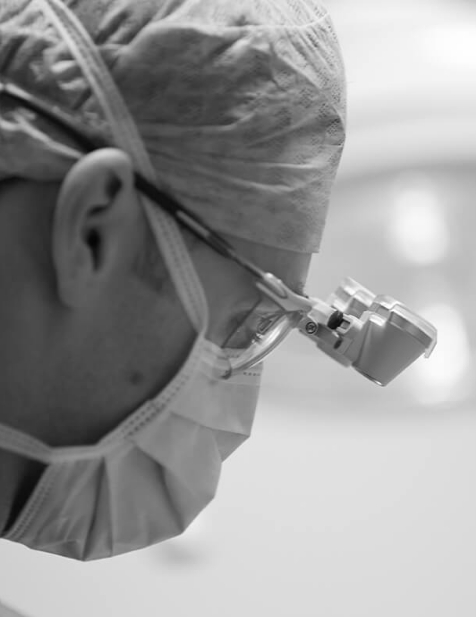
Your personal consultation is the first step to finding the right procedure for you. Dr Jeremy Richardson is a highly skilled Specialist Plastic Surgeon, dedicated to providing quality results and a positive patient experience.
 Discuss your physical concerns and goals
 Receive an outline of your surgical options
 Get quality advice from a Specialist Plastic Surgeon
 Receive a customised treatment plan
 Meet Dr Richardson’s Patient Coordinator and team who will support you through your journey
As with all surgical procedures, dimple creation surgery carries risks and potential complications. These vary between patients and depend on a range of individual factors. Risks associated with dimpleplasty may include:
This is not a complete list of all possible risks. Dr Richardson discusses the specific risks relevant to each patient’s individual situation during the consultation.
A consultation with Dr Richardson is the most important step in the process. During this appointment, he takes a thorough medical history, assesses the patient’s facial anatomy, and listens carefully to what they are hoping to understand or achieve. He explains what the procedure involves in plain terms, outlines the risks, describes what recovery may involve for that specific patient, and answers any questions.
Dr Richardson explains whether dimpleplasty is appropriate based on your individual situation. Patients are encouraged to think about the information provided and to ask further questions if needed. Time is given to consider options carefully before deciding whether to proceed.
A consultation with Dr Richardson is the most important step in the process. During this appointment, he takes a thorough medical history, assesses the patient’s facial anatomy, and listens carefully to what they are hoping to understand or achieve. He explains what the procedure involves in plain terms, outlines the risks, describes what recovery may involve for that specific patient, and answers any questions.
Dr Richardson explains whether dimpleplasty is appropriate based on your individual situation. Patients are encouraged to think about the information provided and to ask further questions if needed. Time is given to consider options carefully before deciding whether to proceed.
Dr Jeremy Richardson is a Specialist Plastic Surgeon and Fellow of the Royal Australasian College of Surgeons (FRACS Plast) in Plastic and Reconstructive Surgery. This is the recognised specialist qualification for plastic surgeons in Australia, awarded after completing an accredited training programme and formal examinations. His training included an international fellowship at Oxford University Hospitals NHS Foundation Trust in the United Kingdom, with a specific focus on head and neck surgery, as well as additional aesthetic surgical training in London’s Harley Street Medical District.
He is an ANZBCPS Board Certified Cosmetic Plastic Surgeon and a member of the International Society of Aesthetic Plastic Surgeons (ISAPS), the Australasian Society of Aesthetic Plastic Surgeons (ASAPS), the Australian Society of Plastic Surgeons (ASPS), and the Australasian Academy of Facial Plastic Surgery (AAFPS). These memberships reflect a continued engagement with the standards and developments in plastic and aesthetic surgical practice, both in Australia and internationally.
Dimple creation surgery requires a precise understanding of facial anatomy and the structural relationship between the cheek tissue and the overlying skin. Dr Richardson’s specialist training in head and neck surgery, combined with his broader experience in facial plastic and reconstructive procedures, means he brings a thorough clinical understanding to the assessment and performance of this procedure. Patients considering dimpleplasty can expect a consultation where Dr Richardson assesses their individual anatomy, explains what the procedure involves, and discusses what results may be possible in their situation.


416 Queens Parade,
Fitzroy North, VIC 3068 
 (03) 9486 6721
  reception@jeremyrichardson.com.au
  (03) 9923 2721
Follow Us Online:


Please fill out our form below and one of our helpful staff will be in touch with you shortly.
"*" indicates required fields


 (03) 9486 6721


 Call Now
 Contact Us