


 (03) 9486 6721


Scars are a normal part of healing after plastic surgery, but understanding how to care for your incisions can make a difference to how scars develop and mature.
If you are searching for scar treatment after surgery or how to reduce scars after plastic surgery, it helps to know which strategies are commonly recommended, which need surgeon guidance and which claims should be treated with caution.
Dr Jeremy Richardson, Specialist Plastic Surgeon at Queens Parade Specialists in Fitzroy North, Melbourne, provides postoperative scar management advice, including wound care, surgical tapes, silicone gel and massage.
Why do scars form after surgery?
Scars form when the body repairs damaged skin and deeper tissues. During healing, collagen is produced to strengthen the injured area before gradually reorganising as the scar matures. A surgical scar may initially feel firm, look raised or appear redder than the surrounding skin. These changes are common during early healing.
Scar formation is influenced by:
- Genetics and skin type
- Incision location and surrounding skin tension
- Surgical technique and wound closure
- Sun exposure
- Smoking, vaping and nicotine use
- Infection or delayed wound healing
- Previous hypertrophic or keloid scarring
- Postoperative wound care
- Medical conditions
Hypertrophic scars are raised, thickened scars that remain within the original wound boundaries. Keloid scars extend past those boundaries and can continue growing after the wound has healed.
Identifying changes early allows Dr Richardson to assess the scar and discuss additional treatment if required.
How long do surgical scars take to heal?
Surgical scars change significantly during the months following surgery. Although an incision can close within the first few weeks, deeper healing and scar maturation continue much longer. Dr Richardson describes the following general stages.
First few weeks
The incision closes and early healing takes place with some swelling, redness, tenderness and firmness expected.
Three to four months
Scars can remain slightly raised, firm or lumpy as collagen continues to develop and reorganise. The incision and surrounding tissues may feel swollen and ”woody”.
Up to 12 months
Redness or pink colouring may remain visible while the scar gradually softens and flattens.
Around 18 months
Many scars have reached a more mature stage, usually becoming flatter and paler than during early healing.
What works for surgical scars?
Following wound care instructions
The first stage of scar management begins with caring for the surgical incision. Dr Richardson provides instructions about dressings, showering, wound cleaning, suture removal and activity restrictions. These can differ between facial procedures and other types of surgery.
Avoid picking at scabs, removing surgical tapes early or applying unapproved creams and skincare products to healing incisions. Report any increasing redness, warmth, discharge, wound separation or worsening pain to Dr Richardson’s team.
Reducing tension on scars
Reducing tension across healing incisions is an important part of surgical scar management. Movement, stretching, heavy lifting and strenuous exercise can place pressure on recently closed wounds. Following postoperative activity restrictions helps protect healing tissues.
Dr Richardson recommends Micropore tape along suitable incisions for the first six weeks after surgery, following suture removal. The tape supports the healing incision and can help reduce tension across the scar to allow early suture removal and avoid marking. His postoperative instructions explain how often to replace the tape and when it can get wet.
Not every incision requires the same taping schedule. Facial incisions, skin grafts and scalp wounds can need different care, such as with ointment or early application of silicone gel, so follow the instructions provided for your specific procedure.
Silicone gel and silicone sheets
Silicone-based products are commonly used to manage surgical scars, especially scars that are raised, thickened or prone to excessive scarring. Silicone helps maintain hydration around the scar and can reduce firmness, redness and itching in some patients. Products include silicone gels, sheets and strips.
Dr Richardson generally recommends applying silicone gel and massage from approximately six weeks to six months after surgery for suitable incisions.
Consistent use is important, and the product should only be started when the wound has healed sufficiently. Do not apply silicone gel or sheets to open wounds, irritated skin or unhealed incisions unless specifically instructed.
Sun protection for surgical scars
Sun exposure can darken healing scars, making changes in colour more noticeable and is especially relevant for facial surgery, where incisions are positioned around the ears, hairline, eyelids or nose.
Sun protection is very important during the first 12 months while scars are still maturing.
- Wear a broad-brimmed hat when outdoors
- Keep healing scars covered where possible
- Use broad-spectrum SPF 50 or higher sunscreen once the skin has healed
- Avoid direct sun exposure during early recovery
- Avoid tanning and solariums
Scar massage after surgery
Scar massage can be included in postoperative care to help soften firm tissue, manage sensitivity and support movement around a healing scar.
Dr Richardson’s general postoperative instructions include massage with a simple moisturiser during the scar-taping stage, followed by silicone gel massage as healing progresses. But massage should only begin when the incision is sufficiently healed and Dr Richardson has confirmed the area can tolerate pressure.
Delicate facial incisions, especially around the eyelids, require additional care. Applying too much pressure or starting massage too early can irritate healing tissues. The technique, pressure and frequency should follow the instructions given for your surgery.
What doesn’t work for surgical scars?
Miracle scar creams and oils
No cream, oil or topical product can completely remove a surgical scar. Many products are marketed as treatments that erase scars or make incisions invisible, but these claims are not supported by clinical evidence.
A basic moisturiser can help manage dry or itchy skin after an incision has healed. Avoid applying retinoids, exfoliating acids, fragranced products or other active skincare directly to healing incisions.
Starting scar treatment too early
Scar care needs to match the stage of healing. Applying silicone products, massaging an incision or using active skincare before the wound has closed can cause irritation or interfere with healing.
The correct timing depends on the incision location, skin condition, sutures, dressings and surgery performed.
Ignoring changes in your scar
Some redness, firmness and raised tissue are expected during healing, but worsening symptoms should be assessed.
Contact Dr Richardson if your scar becomes increasingly painful, thick, itchy or raised, or if you notice unusual swelling, discharge or changes extending further than the original incision. Early specialist review can help identify hypertrophic or keloid scarring and determine if additional treatment is needed.
Can surgical scars be treated later?
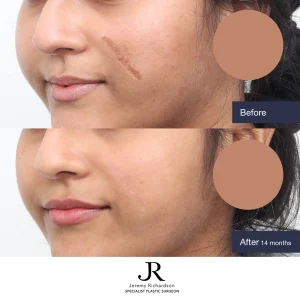
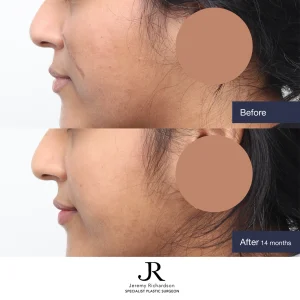
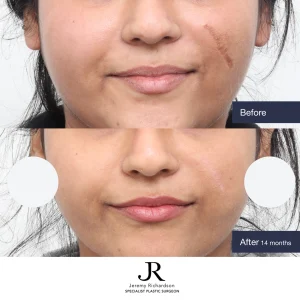
Scars that remain raised, thickened, painful or prominent after healing can sometimes be treated further. Depending on the scar type, location and maturity, treatments can include silicone therapy, corticosteroid, muscle-relaxing and laser treatment, microneedling, dermabrasion or surgical scar revision. It is generally advised to wait at least 8 weeks before commencing these, and Dr Richardson and his team will advise when to commence these treatments.
Scar revision does not remove a scar completely. Instead, it involves treating or surgically adjusting scar tissue to address concerns such as thickness, position, tension or appearance.
Dr Richardson will assess the scar before recommending treatment, as some scars benefit from more time to mature before further intervention.
FAQs about managing surgical scars
Can surgical scars disappear completely?
Surgical scars do not disappear completely, although many become flatter, softer and paler as they mature, with scar maturation continuing for up to 18 months.
When should I start using silicone gel on a scar?
The general recommendation for silicone gel starts from 6 weeks after surgery, continuing through to 6 months for suitable incisions. The wound must be healed beforehand and skin grafts or other incision types have different instructions.
Does vitamin E oil help surgical scars?
There is limited reliable evidence that topical vitamin E improves surgical scar appearance. It can also irritate the skin or cause contact dermatitis in some people.
Plastic surgery and scar management in Melbourne
Dr Jeremy Richardson, MED0001204528, is an ANZBCPS Board Certified Specialist Plastic Surgeon with qualifications including MBBS (Hons), BMedSc (Hons), DipSurgAnat and FRACS (Plast). He has a special interest in facial cosmetic and reconstructive surgery, including facelift, neck lift, blepharoplasty, brow lift and rhinoplasty.
Consulting at Queens Parade Specialists in Fitzroy North, Dr Richardson provides surgical planning and postoperative care, including advice on incision healing, scar management and recovery.
To discuss plastic surgery, postoperative scar care or concerns about an existing surgical scar, contact Queens Parade Specialists in Melbourne.
This article is for general information and educational purposes only. It is not a substitute for professional medical advice, diagnosis or treatment. All surgery carries risk and results may vary. Consult Dr Jeremy Richardson, MED0001204528, MBBS (Hons), BMedSc (Hons), DipSurgAnat, FRACS (Plast), Specialist Plastic Surgeon, for tailored advice and treatment.
References
American Academy of Dermatology Association. (n.d.). Scars: Diagnosis and treatment. https://www.aad.org/public/diseases/a-z/scars-treatment
Metro North Hospital and Health Service. (Reviewed in 2018). Scar management [Patient information sheet]. Queensland Health. https://metronorth.health.qld.gov.au/wp-content/uploads/2017/10/scar-management.pdf


 (03) 9486 6721
 reception@jeremyrichardson.com.au
 (03) 9923 2721


 Call Now
 Contact Us